
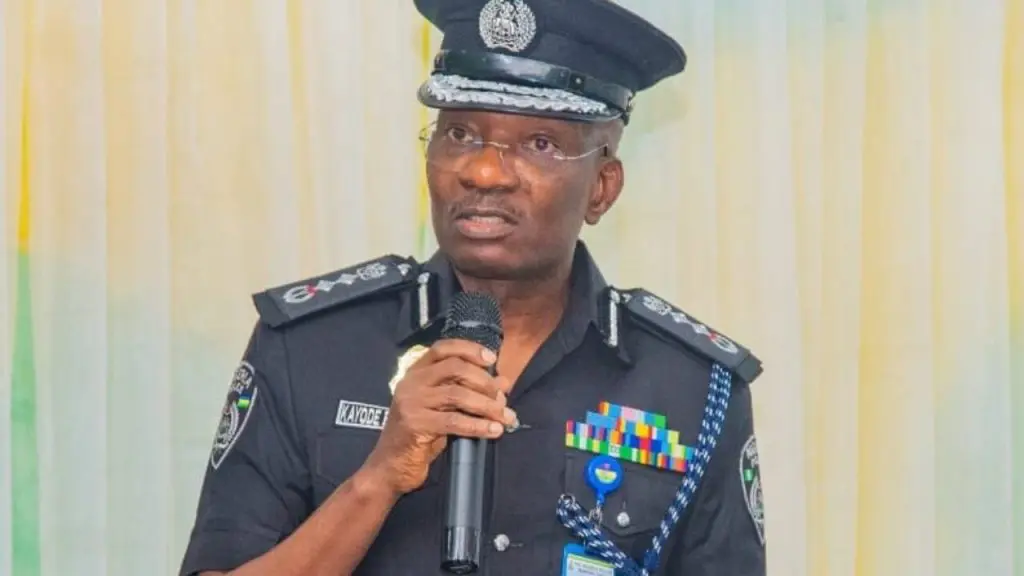
The Nigeria Police Force may be on the brink of one of its largest leadership shake-ups in recent years, as no fewer than 29 senior officers are reportedly set to be dismissed following the removal of Inspector-General of Police, Kayode Egbetokun.
According to an exclusive report by SaharaReporters, President Bola Tinubu ordered Egbetokun’s sack, with official confirmation expected soon.
Sources within the police hierarchy and the Police Service Commission were quoted as saying that Egbetokun has been instructed to prepare his handover notes. He is expected to hand over to Tunji Disu, currently serving as Assistant Inspector-General in charge of the FCID Annex, Alagbon, Lagos.
Beyond the removal of the IGP, the development is said to extend to at least 29 high-ranking officers, including several Deputy Inspectors General and Assistant Inspectors General.
Some sources alleged that the President cited a series of controversies and governance concerns in making the decision. Reports also suggested that the development was met with jubilation among some officers.
Storm of Allegations
Egbetokun’s tenure was characterized by heated debates over the legality of his extended stay in office. Civil society groups questioned the extension beyond the statutory retirement threshold, describing it as a departure from established norms.
Additional allegations emerged during his tenure, including claims of favoritism in promotions and financial impropriety involving funds reportedly linked to Anambra State’s security vote.
Rather than submitting to what critics described as independent scrutiny, the police leadership pursued legal action against journalists and activist Omoyele Sowore, who had publicly criticized the IGP. Court orders were subsequently issued restraining further publications concerning Egbetokun and members of his family.
Critics argued that these legal battles amplified concerns about transparency and press freedom.
As the Force awaits an official statement, analysts note that the reported mass exit of senior officers could significantly alter the power structure within the institution and shape the direction of policing and reform in the months ahead.